Meeting a Moose at Midnight!

January 11, 2018

By Linda McElroy

Meeting a Moose at Midnight

This WildAware article is submitted by Acton resident, Linda McElroy. Linda founded the Acton Land Stewardship Committee in the mid-1990s, and the Trail Through Time in the mid-2000s. The TTT, a Community Preservation Act project, highlights local Native American and Colonial landscape artifacts. Please visit https://trails.acton-ma.gov/trail-through-time/ for more information.

I arrived at my Maine cabin-in-the-woods very late one August evening. Following my routine upon-arrival ritual, I first took the path down to the brook to listen to its voice and say “hello” to the creatures who live there. Then, I jogged along the short path to the pond, lantern in hand, carefully flashing its light from side to side so as not to startle anyone browsing in my woods.

Bursting out of the woods into the clearing beside the pond, I immediately sensed a strong rank odor. “I don’t remember the Beavers being that smelly”, I thought to myself. Scrambling up the embankment beside the dam, I scanned the entire area with the lantern. All was still. But I did notice that there seemed to be a rather long smooth opaque panel where brushy vegetation had always grown. “Better check that out”, I thought.

I moved a few steps closer, and trained the light on one side of the opaque panel, still puzzling why there was no definition of leaves and woody structure. Gradually, I swept the light along this panel to its other side. Toward the end of this scan, an extremely large eye was calmly studying me. “Moose!” my mind screamed, and my feet took off before I remembered that was not the thing to do.

This cow moose had had twins that year. I had observed them from my kayak at the marshy end of the pond, where she fed on the rich underwater grasses almost constantly, to provide enough milk for the two buff-colored calves, out of sight among the reed clumps. She would dip her entire horse-sized head–except for the ears–into the murky water for a few moments, then come up for air and a vigilant look around, while buckets of water poured off her head and shoulders. Thus, I had not expected to see her at my end of the pond.

At maturity, a cow moose weighs between 500 and 700 pounds, (bulls up to 1,000 pounds), may stand 6 feet at the shoulders, and first gives birth at three years of age. The largest member of the deer family, moose range throughout much of North America. They were abundant in Massachusetts until European settlers cut the forests for agriculture. But since the 1980s, a few are seen again in Eastern Massachusetts, as hunting restrictions have caused the population to burgeon.

Moose are browsers, and prefer wetland habitats, though they will keep mainly to forested areas. Calves born in mid-May remain with their mothers for about a year, when they are driven away as the cow prepares to give birth again. With birth weights of about 20 pounds, they can grow to nearly 300 pounds by the fall. Bulls, much larger, are also much darker than cows, who may be light-bodied.

A moose’s size and strength prevent predation from other animals, but human hunters, vehicles, and, more recently, ticks, claim quite a number of lives. Ticks do not transmit the diseases they carry to moose, as is also true with deer, but the sheer number of ticks now everywhere in Northern New England may weaken them through blood loss. An animal thus weakened may be taken by a bear.

In my hasty flight, I stumbled, fell, lost the lantern, and arrived at the cabin safely but completely out of breath. A better tactic, should you meet a moose, is to back away slowly and steadily without making eye contact. Never get between a cow and her young. Once a moose is aware of your presence, usually it will just majestically blend into the forest, and be gone.


Paula Goodwin is a member of the Acton Conservation Commission who introduced WildAware with Acton Natural Resource Assistant Bettina Abe. WildAware is a program sponsored by the Town of Acton Natural Resources Department that began in September, 2015. The purpose of WildAware is to educate the community about the existence and habits of wild creatures, and the goal is increased community awareness of shared habitats. For information, call 978-929-6634 or send email to nr@acton-ma.gov.
Exploring Exfoliating Bark

December 28, 2017

By Maggie Abe

 Textured Trunks: Exploring Exfoliating Bark

Today’s WildAware article is submitted by Acton resident, Maggie Abe. Maggie is a local artist who is a member of the Board of Directors of The Friends of the Acton Arboretum, Inc.

As winter approaches, the landscape grows starker. The green of summer dulls, then goes dormant. All too soon, fall’s conflagration flares and fizzles, the leaves becoming brittle and brown. One might think the Arboretum has little to offer in these bare months, but this is a wonderful time of year to examine features often overlooked in the surfeit of spring and summer. Exfoliating bark is a fascinating adaptation of a number of species showcased in the Arboretum and provides a welcome pop of texture during the leaner months.

Exfoliating or not, bark is vital to a tree’s health. A tree’s outermost bark is dead and shields the inner, living bark. The inner bark, phloem, carries the products of photosynthesis throughout the plant, becoming the outer bark as the tree grows. In the cambium layer, new phloem forms just under the bark; on its other side, the cambium also produces new sapwood, or xylem, which makes up the bulk of the tree and transports water. We see this growth in cross-section as annual rings, with the youngest rings being those farthest from the central heartwood.

Bark is referred to as “exfoliating” when it exhibits a peeling or flaking behavior. It is a natural process and allows the tree to quickly recover from injury—common in temperate regions with snowy winters—as well as rid itself of disease and pests. Some theorize that in birches (Betula spp.), exfoliating bark facilitates the removal of light-blocking lichens, enabling sunlight to reach the inner bark for photosynthesis. Shedding old bark could also provide a way for trees to undergo rapid growth in diameter without their bark fissuring, which weakens it. There are likely other benefits of exfoliation still unknown to us!

Detailed below are some trees with exfoliating bark living in the Arboretum. Appreciate their unique beauty year-round!

Dawn redwood (Metasequoia glyptostroboides)

The dawn redwood is an ancient tree originating in China and thought to be extinct until the 1940s. Harvard’s Arnold Arboretum is responsible for disseminating its seeds throughout the U.S.; today, it can be found in parks around the world. It has reddish bark, a sinewy trunk, and green needles that turn orange in the fall. There are four dawn redwoods in the Acton Arboretum: one across from the rain garden, another between the grape arbor and the hosta garden, and two in the rhododendron garden.

Japanese stewartia (Stewartia pseudocamellia)

Peer through the branches and you will see this tree’s beautiful trunk, silvery and mottled like the neck of a giraffe. The bark exfoliates in smooth patches. In the summer, it grows round white flowers with yellow centers. The Arboretum’s stewartia is located on the main lawn where the path first branches, visible from the parking lot.

Paperbark maple (Acer griseum)

This tree’s copper color stands out against the white of winter. Its bark peels off in luminescent, peach curls. You can find this tree by the Arboretum’s stone reading circle.

Bald cypress (Taxodium distichum)

This tree is reminiscent of something you might see in a primordial mangrove. Like the dawn redwood, it is a deciduous conifer, with soft green needles that turn russet in the fall. Curved protrusions called “knees” shoot off its roots and break the soil around the tree; they brace the tree and provide extra support in sodden soil and inclement weather. The tree’s flaky bark is especially evident on the knees. Head over to the rhododendron garden to find the Arboretum’s specimen.

River birch (Betula nigra)

While all birches have exfoliating bark, the sort that comes away in papery sheets and delicate curlicues, the river birch is “adaptable to both flood and drought and is more disease-resistant and heat-tolerant than any other birch” (Carlsmith, 1983). It has orange-tinged bark and maroon twigs. The Arboretum’s river birch grows in the understory study.

Bibliography

  • “Anatomy of a tree.” Trees, U.S. Forest Service, 2017. <fs.fed.us/learn/trees/anatomy-of-tree>
  • Carlsmith, Anne. “The River Birch.” Arnoldia, vol. 44, no. 1, 1983, pp. 29-31. <jstor.org/stable/42954180?seq=1#page_scan_tab_contents>
  • Kozlowski, Gregor. “Why do some barks peel?” Online posting. ResearchGate, 15 Oct. 2016. <researchgate.net/post/Why_do_some_barks_peel_What_are_the_advantages_of_exfoliating_for_a_tree
  • “Oh! That Exfoliating Bark!” Life on the Greenway, Rose Kennedy Greenway Conservancy, 31 Jan. 2013. <blog.rosekennedygreenway.org/2013/01/31/oh-that-exfoliating-bark/>
  • Rhoades, Heather. “Trees With Interesting Bark—Using Exfoliating Bark On Trees For Seasonal Interest.” Gardening Know How, Gardening Know How, 25 Mar. 2015. <gardeningknowhow.com/ornamental/trees/tgen/exfoliating-bark-trees.htm>
  • “Stewartia pseudocamellia.” Plant Profiles, Holden Arboretum, 2017. <holdenarb.org/horticulture/plant-profiles/stewartia-pseudocamellia/>
  • “The Dawn Redwood [Metasequoia].” About, The Bailey Arboretum, 2017. <baileyarboretum.org/the-dawn-redwood/>


Paula Goodwin is a member of the Acton Conservation Commission who introduced WildAware with Acton Natural Resource Assistant Bettina Abe. WildAware is a program sponsored by the Town of Acton Natural Resources Department that began in September, 2015. The purpose of WildAware is to educate the community about the existence and habits of wild creatures, and the goal is increased community awareness of shared habitats. For information, call 978-929-6634 or send email to nr@acton-ma.gov.

Oppossums: Beneficial Wildlife Neighbors

November 9, 2017

By Paula Goodwin

Opossums:Beneficial Wildlife Neighbors

The Virginia Opossum (didelphis virginiana) is found in Acton and throughout Massachusetts except for Dukes and Nantucket counties. The Opossums’ preferred habitat is on the edge of forests near streams and wetlands. It is one of the few animals that is becoming more common, although its natural life span is just about 2 years. The Opossum is North America’s only marsupial, (from Latin meaning  “pouch.”)


Male opossums are called jacks and females are called jills. After a pregnancy of  just two weeks, baby opossums are born. The tiny bee-sized joeys crawl into their mother’s pouch where they are protected and nursed for about 60 days. It is in the pouch that most of the joeys’ development takes place. At about 55 days the joeys finally open their eyes, crawl out of the pouch and cling to their mother’s back. The joeys ride along, learning from her the wide variety of foods to seek for their omnivorous diet that has earned them the reputation as one of nature’s sanitation workers! Their diet includes insects (including ticks), slugs, eggs, birds,frogs, plants, fruits and mammals as large as rabbits. They also eat human food and have been known to push over trash cans looking for leftovers. Opossums have a great need for calcium which they consume by eating animal bones.


Opossums are nocturnal mammals with enormous pupils which let in the dimmest light and long whiskers on the sides and front of their snouts which help guide their nightly foraging as they travel almost 2 miles through an area roughly 12 acres in size. Opossums are skilled climbers with opposable thumbs on their hind legs and a hairless prehensile tail that they use to anchor themselves in treetops to increase their reach for berries and other fruits. The tail is also used for carrying grass and leaves in a bundle when changing the bedding in its tidy den. Although opossums are often preyed upon by other nocturnal animals such as owls, foxes and bobcats, they are exceedingly resilient. If its loud hissing and the sight of its open jaws showing 50 pointy teeth does not deter a predator, the opossum will collapse to the ground with eyes open, mouth open and drooling, with its tongue hanging out. Its heart rate slows allowing it to lay very still as if dead, “playing possum” until the predator leaves. People think opossums might be rabid when they drool and hiss and carry on when threatened, but rabies in opossums is extremely rare. It may have something to do with the opossum’s low body temperature (94-97º F) making it difficult for the virus to survive in an opossum’s body.  Opossums have partial or total immunity to the venom of rattlesnakes and other poisonous snakes.


It turns out opossums are allies in the fight against Lyme disease. From Rick Ostfeld, senior scientist at Cary Institute of Ecosystem Studies: “Possums, like many other small and medium sized mammals, are hosts for ticks looking for a blood meal. But opossums are remarkably efficient at eliminating foraging ticks. Several years ago, scientists decided to learn about the part different mammals play in the spread of the ticks and the disease. They tested six species — white-footed mice, chipmunks, squirrels, opossums and veerys and catbirds — by capturing and caging them, and then exposing each test subject to 100 ticks. What they found, is that of the six, the opossums were remarkably good at getting rid of the ticks — much more so that any of the others. “I had no suspicion they’d be such efficient tick-killing animals,” Ostfeld said. Indeed, among other opossum traits, there is this: They groom themselves fastidiously, like cats. If they find a tick, they lick it off and swallow it. (The research team on the project went through droppings to find this out.) Extrapolating from their findings, Ostfeld said, the team estimated that in one season, an opossum can kill about 5,000 ticks.


University of Michigan BioKids: http://www.biokids.umich.edu/critters/Didelphimorphia/

NH Public Television: http://www.nhptv.org/natureworks/opossum.htm#6

Science Daily: https://www.sciencedaily.com/releases/2009/12/091215202320.htm

Mass Audubon-Situations and Solutions/Opossums: https://www.massaudubon.org/learn/nature-wildlife/mammals/opossums/situations-solutions

Cary Institute of Ecosystem Studies: http://www.caryinstitute.org/newsroom/opossums-killers-ticks

Opossum by Tom Jackson

Backyard Jungle Safari Opossums by Ann Tatlock

Mother Nature Network: https://www.mnn.com/earth-matters/animals/stories/10-things-you-didnt-know-about-opossums

Opossum Society of the United States: http://opossumsocietyus.org/faq-opossum/

Paula Goodwin is a member of the Acton Conservation Commission who introduced WildAware with Acton Natural Resource Assistant Bettina Abe. WildAware is a program sponsored by the Town of Acton Natural Resources Department that began in September, 2015. The purpose of WildAware is to educate the community about the existence and habits of wild creatures, and the goal is increased community awareness of shared habitats. For information, call 978-929-6634 or send email to nr@acton-ma.gov.

A Good Steward

October 12, 2017

Acton WildAware Beacon Article

By Bettina Dabney Abe

A Good Steward

Acton is fortunate to have over 1,700 acres of public conservation land, free and open to the public from dawn to dusk 7 days a week, 365 days a year. There are over 30 miles of hiking trails combined on these lands. One can bike, cross-country ski, walk dogs and ride horses on them. Visitors may venture through deciduous and pine forests; perambulate past bogs and swamps; meander through meadows and scrub lands. All the while, one may wonder who exactly maintains all these areas of peace and natural tranquility.

Acton boasts a team of volunteers, the Land Stewards, who assiduously tend these lands all year long. One steward just celebrated his 90th birthday. He hikes miles every week in his Wednesday Wanderers group, and organized at least a dozen workdays this summer cutting vast amounts of invasive bittersweet and multi-flora rose from a pretty stone wall in Nagog Hill conservation land. The Land Stewards and the Natural Resources Department are always looking for more folks to help out on trail projects, including at the Acton Arboretum. We will train your family and friends. Please visit trails.actonma.gov. Click VOLUNTEER.

What about being a good steward of your own property? How can one apply best conservation practices at home? One way is to identify “invasive” plants banned from sale in North America. They reproduce quickly, outcompeting others that have been part of this ecosystem for thousands of years and upon which birds, pollinators and all other animals depend. Learn the best methods to remove them. The New England Wildflower Society in Framingham is a superb resource http://www.newenglandwild.org/images/protect/Invasive%20Brochure%20Reduced%20File%20Size.pdf . Create a maintenance plan to control re-sprouts. Check out the Invasive Plant Atlas of New England http://www.eddmaps.org/ipane/

Be a good steward of wetlands. If you have wetlands on or near your property, email NR@acton-ma.gov before you do disturb the ground or clear vegetation within 100 feet of a wetlands or 200 feet from a brook or river. Preserving wetlands for plants and animals also prevents flooding and groundwater pollution. Don’t water your lawn; and especially don’t use chemical fertilizers, herbicides and pesticides. There are many other ways to achieve the goal of attractive, sustainable landscaping without poisoning our water supply and wildlife habitat. Build a rain garden to collect storm water from your roof and pavement. They are beautiful, filter and replenish groundwater while protecting brooks. The library is full of color books on these topics. Visit the one adjacent to the Acton Arboretum parking lot.

We can restore habitat. Each native plant species supports insects, birds, animals, and microorganisms. 593 New England species are now listed as rare or possibly extinct. Tell friends and neighbors about invasive plants. Please hike Acton’s trails and bring a friend along. Start a new hobby exploring butterflies, mushrooms, birds or wildflowers, creating your own “collection” with a list or photo anthology. Earn a sticker or a patch hiking Acton’s trails http://www.acton-ma.gov/documentcenter/view/2666 .

Acton Natural Resource Assistant Bettina Abe introduced WildAware with Paula Goodwin, a member of the Acton Conservation Commission. WildAware is a program sponsored by the Town of Acton Natural Resources Department that began in September, 2015. The purpose of WildAware is to educate the community about the existence and habits of wild creatures, and the goal is increased community awareness of shared habitats. For information, call 978-929-6634 or send email to nr@acton-ma.gov.


Coexisting With and Protecting Our Native Snakes

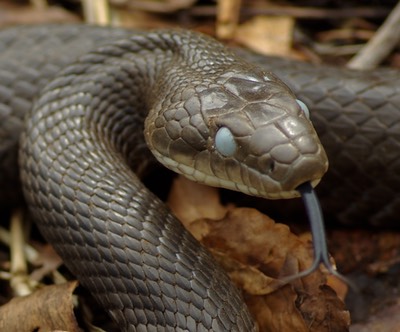
No matter how harmless and beautifully patterned, the sight of a snake sprawled on a shrub or lounging on the pavement near the front door is alarming to most people. Snake photos have been submitted to the Acton WildAware Facebook page by residents who have discovered and wondered about the following harmless common snakes: Garter snake(Thamnophis sirtalis), Northern water snake(Nerodia sipedon),Dekay’s Brown snake(Storeria dekayi) and Eastern Milk Snake(Lampropeltis triangulum). Along with residential neighborhoods in Massachusetts, where they sometimes turn up in yards and basements, native snakes occupy a wide range of habitats found here in Acton, including: fields, forests, wetlands, ponds, lakes, streams, rocky hillsides, farmland, and vacant lots. Within those habitats, snakes may travel along the ground, swim, climb trees and bushes, and venture below ground usually into burrows made by other animals.

Snakes’ bodies are covered with tough, dry scales, either smooth or keeled. The keeled scales have a raised ridge like the keel on the bottom of a boat. Snakes’ underbody scales are called scutes. Snakes’ strong muscles and flexible spines allow them to move along the ground in a few ways; by creeping in a straight line using their belly muscles; bunching and straightening in an S-shaped sine wave pattern and wriggling between obstacles on the ground such as rocks. Snakes lack eyelids and do not see well. They only have inner ears and do not hear sounds they way we do. They depend on their bodies feeling the vibrations in the ground from nearby movement. The snake’s forked tongue is its biggest asset for sensing its environment, hunting prey and avoiding predators. As the tongue flicks out it picks up molecules of matter and pulls them into two slots on the roof of the mouth called the Jacobson’s organ. The diet of snakes varies depending on their species and size and can include insects, worms, amphibians, fish, small mammals and occasionally birds. Snakes are also wary of being preyed upon by hawks, eagles, owls, raccoons, foxes and coyotes and sometimes other snakes.

From the Massachusetts Division of Fisheries and Wildlife, “All snakes receive some protection under the Fisheries and Wildlife Laws and Regulations of the state of Massachusetts. They are protected as important members of our native wildlife communities and as valuable natural resources. None of them may be taken from the wild for purposes of sale. Common species may be hunted, trapped or captured up to a possession limit of two. This “loophole” was deliberately left open so that budding biologists and snake enthusiasts could capture and study a few of the animals if they wished. However, many snakes do not adapt well to captivity. Curiosity can generally be satisfied through a few days of observation, after which the snake should be released in the same place it was found. The Commonwealth is very serious about protecting the priceless natural heritage these animals represent to present and future generations. To report any violations of our wildlife laws, call toll free: 1-800-632-8075. Due to their Endangered Species status, it is illegal to kill, collect, possess or even harrass the following snakes in Massachusetts: Timber Rattlesnake, Copperhead, Eastern Hognose Snake, Black Rat Snake, Worm Snake.”

What to do if you see a snake in your yard or home? Mass Audubon advises, “Suburban yards can provide good habitat for snakes, which may seek cover under stairways, shrubs, wood piles, stonewalls, and dense vegetation. In the vast majority of situations, it’s best to leave the snake alone.  Snakes occasionally enter homes in search of insects or rodents, or a place to warm up or cool off. Try to confine the snake to one room. If there is an exterior door, open it and allow the snake to find its way out. If not, gently sweep the snake into a cardboard box, and release it outdoors.”

Resources

Massachusetts Snake Guide-Massachusetts Division of Fisheries and Wildlife University of Massachusetts Extension: https://ag.umass.edu/sites/ag.umass.edu/files/pdf-doc-ppt/ma_snake_guide.pdf

Mass Audubon: http://www.massaudubon.org/learn/nature-wildlife/reptiles-amphibians/snakes/snake-species-in-massachusetts

American Museum of Natural History: https://www.amnh.org/exhibitions/lizards-and-snakes-alive/squamate-fun-facts

Snakes in Western Massachusetts: http://westernmassnaturalist.org/snake-behaviors/

Tom Tyning 2013 http://westernmassnaturalist.org/welcome/a-rattlesnake-island-in.html A Rattlesnake Island in Quabbin Reservoir?

Umass Amherst-Snakes of Massachusetts: http://www.masnakes.org/

BioKids University of Michigan-Kids Inquiry of Diverse Species: http://www.biokids.umich.edu/critters/Thamnophis_sirtalis/


Paula Goodwin is a member of the Acton Conservation Commission who introduced WildAware with Acton Natural Resource Assistant Bettina Abe. WildAware is a program sponsored by the Town of Acton Natural Resources Department that began in September and will continue through the summer of 2016. The purpose of WildAware is to educate the community about the existence and habits of wild creatures, and the goal is increased community awareness of shared habitats. For information, call 978-929-6634 or send email to nr@acton-ma.gov.

NARA Pond Ecology

May 4, 2017
By Bettina Abe

NARA Pond Ecology

The nine-acre pond at NARA park has a maximum depth of 12 feet.

The park and the excavation for the pond were shaped by bulldozers and excavators. Gravel was excavated to the underlying granite bedrock.

NARA pond is a self-contained, groundwater-fed ecosystem. It does not have tributaries flowing into it. During springtime high water periods, the pond drains through an overflow pipe, flowing into Nashoba Brook, part of the “SuAsCo” (Sudbury, Assabet, Concord River) watershed. NARA pond’s water level changes seasonally depending on precipitation.

The plant community in and around the pond creates habitat for many animals. Stems and leaves create microhabitats between the grains of sand and mud and the undersides of rocks and stones.

Burrowing larvae, mussels, snails and worms live in the mud and feed on the decaying plant matter. Marginal irises, cattails, and rushes are shelter and food for other animals. The leaves and flowers of water lilies float on the surface and have their roots in the mud on the bottom of the pond. Other submerged plants like milfoil are rooted in the mud and provide shelter, food and sites for egg-laying. They also produce oxygen that dissolves in the water.

Algae, photosynthetic creatures, grow in fresh water and are neither plant nor animal. Insect larvae and tadpoles eat the algae. There are essential microscopic organisms in healthy ponds such as Phytoplankton that inhabit the upper, sunlit layer of fresh water. They photosynthesize, create oxygen and sustain the aquatic food web. Zooplankton (crustaceans) eat the phytoplankton, and are a keystone species.

Plant eaters like snails and mussels turn plant matter into energy. They live on the river bottom and are filter feeders, straining plant food from the water.

Ducks and geese eat these herbivores and benefit from the plant energy stored in their prey. Great great blue heron, green heron, spotted sandpiper, mallard, mute swan, gulls, kingfishers, and egrets feed in the shallow edge waters.

Some animals begin life in an egg mass, metamorphose and leave the pond. The dragonfly egg hatches into a nymph and molts up to 15 times during 2 years of growth to adulthood! It’s a fierce predator crawling along the bottom eating other insects or small fish. It climbs up the stem of a plant and molts into a dragonfly, usually at night. They are superb fliers and hunters, with huge compound eyes, speeding over the water and consuming insects. Dragonflies are an indicator species. Their presence and multitude tells us about the overall health of a local pond.

The Phenomenon of Bird Migration

March 17, 2017

By Bettina Abe

The Phenomenon of Bird Migration

It’s hard to believe that spring is around the corner with a foot of snow in our yards. Stepping outside early on a winter morning as the warming sun rises, one hears birds calling like mourning doves, blue jays, cardinals, nuthatches, chickadees, crows, and titmice. These species keep us company even on the coldest days. Many ducks migrate south in the late fall and spend a few weeks on the ponds in Acton, such as buffleheads, blacks, and goldeneyes. These same species can be seen on Nagog Pond during the months of March and April on their return trip north.

How can one attempt to write just a bit about bird migration, a topic which ornithologists devote their careers to? This article will pose more questions than answers. Nevertheless, hobby birders are fascinated by tidbits of information, adding to our petite knowledge bases. We await the Massachusetts Audubon Christmas Bird Count and the annual spring migration bird walks with relish, in hopes of adding someone new to our “life lists.” We stock our feeders and scan the skies for both the familiar and the unusual visitors to our fields, ponds, forests and backyards. Though ornithologists do know a great deal about the phenomenon of bird migration, they continue to learn more. In this time of climate change, bird behavior patterns alter and numbers dwindle. Those who have indulged in the birding hobby for a while will smile as they recall when first they became interested in feathered friends; perhaps as a child, but for many, as adults. It’s hard to say what tipped us off. An article? A birder friend? For me it was the day a flock of cedar waxwings landed in my crabapple tree one February. I grabbed the bird book and proudly identified them. I caught the birding fever about the time my kids were avid Pokemon and Beanie Baby collectors.

The more one learns about the extreme athletic feat of migration, the more one can marvel at these remarkable animals. How do they possibly know the way? How fast do they fly? What routes do they take? How is it possible a ruby-throated hummingbird can fly across the Gulf of Mexico? What about storms and reduced visibility? Predators and planes? Drones and wind turbines? Skyscrapers? Pick up any field guide to North American birds such as Sibley, Peterson, National Geographic, National Audubon or Stokes. Next to each species will be a colored map indicating where each spends the seasons. An excellent resource is the Massachusetts Wildlife magazine, published quarterly by the Massachusetts Division of Fisheries & Wildlife. Taking up birding can lead one to venture into the great outdoors and onto Acton conservation land (www.actontrails.org), taking one’s mind off of politics or other stressful aspects of life. Acton Recreation offers a wonderful birding class each spring.

You may notice that the red wing blackbirds have already returned from their sojourns in the south. Song sparrows were trilling a week ago along Ft. Pond Brook before our recent March snows. Though some bluebirds do winter over here in Acton, many more will return from the south. The months of April and May are when songbirds come back in droves from Florida, Mexico, Central and South America; you can also see spectacular species like the indigo bunting or scarlet tanager arriving here to breed.

In an article about sea ducks by H W Heusmann (Mass.Wildlife No.3, 2015) titled “Longtails & Harlequins” he tells us that “…tens of thousands of Long-tails winter in Massachusetts’ Nantucket Sound. They roost there overnight, then fly out to the Nantucket Shoals at dawn. There they spend the day at sea feeding, then return to their roosting area at dusk.” And that “Long-tails are exceptional divers, and have been caught in gill nets in Lake Michigan at depths of 150 feet.” (Neither species is found in Acton; both are coastal species in Massachusetts.)

MassWildlife Magazine Issue No.4, 2015 contains an article by Norman Smith, who has studied snowy owls for 35 years, explains that they are sometimes cannibals, like to live at Logan Airport, feast on lemmings on the Canadian tundra, and can see prey 2 miles away! One owl tracked by satellite transmitter had traveled over 7,000 miles in just 9 months. A great place to see Snowy Owls during the winter months is Plum Island.

Once hooked on birding, you will share sightings with others and never run short of conversation topics, posing astute analogies for life about travel, endurance, faith, diversity and song.

Spring Fishing in Local Streams, Rivers and Ponds

April 13, 2017

By Paula Goodwin

A sure sign of spring is the sight of anglers at the edge of streams and ponds, or casting from boats on the water. Fishing is enjoyed by many people of all ages as a relaxing pastime. For residents new to the area, and for those just getting started, fishing conditions are best when the water level is high and temperature cool, as it is in April and May. There are many places to fish the local streams, rivers and ponds in Acton and Boxborough and the most sought after fish are trout. OARS collaborates with Concord Outfitters and the Greater Boston Chapter of Trout Unlimited to improve trout habitat and populations in the Assabet River.

According to the OARS website, “The aim of this project is to re-establish a self-sustaining population of brown trout in the river. Brown trout have historically been found in the mainstem Assabet and are a good choice for restoration because they can tolerate higher water temperatures – – typical of a larger river — than native brook trout can.” The Concord Outfitters website provides a River reports page with current USGS Water Level data and helpful notes about current flies of choice for fly fishing enthusiasts. This spring, Concord Outfitters has already stocked the Assabet River with trout. MassWildlife will be stocking Fort Pond Brook, Nashoba Brook and Guggins Brook with Rainbow and Brown trout within the next few weeks.

The history of state fisheries and hatcheries was shared by Dr. Ken Simmons of the Massachusetts Division of Fisheries and Wildlife (MassWildlife) in a speech he gave on March 27, 2014. Due to water degradation during the industrial revolution, Simmons said, “By 1856 the public outcry by the citizens of Massachusetts was so great that the very first commission was created with fish experiments and in fish culture. This early experimentation and public need to both heal and repopulate our fish population in our state eventually led to the creation of the Massachusetts Fish Commission in 1866.” With the creation of this commission, the first state trout hatchery was opened in the year 1868 in Wareham. Currently, there are four hatcheries in Massachusetts: in Belchertown, Sandwich, Sunderland and Montague. Along with stocked trout, local waters are habitats for a variety of other freshwater fishes.

During the June, 2016 Acton WildAware Bioblitz, resident Matthew Ashby contributed his findings:

•Assabet River in South Acton, upstream of the bridge by the Canoe Launch on Powdermill Road his list included Black Crappie, Smallmouth Bass, Bluegill, Fallfish, Redbreast Sunfish, and Pumpkinseeds; Brown trout (stocked). He also noted Brown caddisflies laying eggs on the water.

• Ice House Pond, likely 3 Pumpkinseeds guarding their nests and one Smallmouth bass about 7″ long.

•At the pond at Great Hill: an abundance of Pumpkinseeds, one big Smallmouth bass nearly a foot long.

•At NARA Park: Hundreds of Pumpkinseeds and dozens of Smallmouth bass.

• To fish Grassy Pond, Matthew recommends that you’d want to portage a canoe in unless your preference is to fish from the pier. He advises that for the most part Guggins Brook’s water level drops too low to hold fish after June.

Free, public access and parking are available! For Ft. Pond Brook:

* Jones Field, South Acton, behind the playground. After the Assabet River Rail Trail is finished, there will be parking at the trailhead opposite the South Acton Trail Station on Maple Street.

* Weekends only, on the bridge between Gates and Douglas Schools in West Acton. Do not go during school hours.

* Park on Carriage Drive and fish along Ft. Pond Brook along River Street. Put a sign “fishing along River Street” on the windshield so the Police know.

* Jenks Conservation Land, from the parking lot- walk down the trail and fish in Ft. Pond Brook down the trail.

* Fort Pond Brook-Mill Pond (impoundment) Park at 110 Main Street in a general municipal lot. For Nashoba Brook:

* Park at the end of Wheeler Lane and get a map of Nashoba Brook conservation land. There are places to fish. Ice House Pond – On Concord Road Assabet River:

* Acton Canoe Launch 65 Powder Mill Road NARA Pond in NARA Park Grassy Pond, in conservation land 236 Nagog Hill Road Guggins Brook Conservation Land, Boxborough

Resources:

A Guide to Eating Fish Safely in Massachusetts http://www.mass.gov/eohhs/docs/dph/environmental/exposure/fish-eating-guide.pdf

Massachusetts Fish and Wildife Guide to Hunting, Fresh Water Fishing and Trapping: http://www.eregulations.com/massachusetts/huntingandfishing/

Massachusetts State Fish Hatcheries http://www.masslive.com/news/index.ssf/2016/06/cold_water_state_fish_hatchery.html

Fish and Aquatic Conservation https://www.fws.gov/fisheries/nfhs/fish_production.html

Fishing in Acton and Boxborough http://www.mass.gov/eea/agencies/dfg/dfw/hunting-fishing-wildlife- watching/fishing/northeast-district-waters.html

OARS Fish Stocking http://www.oars3rivers.org/our-work/initiatives/fish-stocking

Massachusetts Fishing License: https://www.ma.wildlifelicense.com/IS/Customer/InternetCustomerSearch

Trout Unlimited in Massachusetts: http://ma-ri-tu-council.org/

Visit Massachusetts State Fish Hatcheries-information http://www.mass.gov/eea/agencies/dfg/dfw/about-masswildlife/state-fish-hatcheries.html

Massachusetts Organization of State Engineers and Scientists: http://moses-ma.org/story/fish-tale-moses-scientists-key-masswildlife-fish-hatchery-stocking-program

Phenology: Climate and Seasonal Biological Events

July 13, 2017

By Paula Goodwin

Phenology: Climate and the Timing of Seasonal Biological Events

In early spring it is cheering to see the appearance of Snowdrops, crocuses and spring ephemerals that bloom before the trees have leafed out. After the growing season, in the fall, we notice the leaves change color to orange, yellow, red and gold as the leaves’ green chlorophyll fades away.

Phenology is the word used to define the study of how the biological world times natural events. Plants and animals take their cues from their local climate. Climate (long-term weather patterns) is impacted by three non- biological factors that work together: temperature, precipitation and available sunlight. Species use the predictable yearly changes in the climate to determine when they start natural events such as breeding or flowering. These changes in nature inspire many people to keep nature journals.

Clare Walker Leslie, author of the book, Keeping a Nature Journal explains, “whereas a diary or personal journal records your feelings toward yourself and others, a nature journal primarily records your responses to and reflections about the world of nature around you.” This past April, observations of a tree inspired an Acton resident to record: “April 19, 2017 – I don’t remember identifying this tree before. It’s in flower, on the neighborhood side of my house, at the edge of the little woods. Sweet cherry (Prunus avium). I learned that the sweet cherry is an introduced species, but not invasive. It flowers quite early, before the leaves are fully out. If we get fruit, it’s edible (and good in pies) when fully ripe. I don’t remember if this one gives fruit. I also learned that although it’s very similar to sour cherry, the way to distinguish it is that sour cherry has less than 8 parallel veins on it’s leaves, and sweet cherry has more than 8.”

From 1837 to 1861 Henry Thoreau recorded the dates of plant changes he observed after walking in Concord for several hours every day. He took notes on the phenology of different species of grasses, wildflowers, shrubs, and trees he encountered. The charts he created are significant phenology resources.

UMass Extension’s Landscape Message is an educational newsletter intended to inform and guide Massachusetts Green Industry professionals. It also is of interest to the home gardener for its phenology reporting of bloom times and garden pest updates.

Metro West data is collected in Acton. See the resource list below for the website address. You can subscribe to receive the Landscape Message by email.

The USA National Phenology Network encourages people of all ages and backgrounds to observe and record phenology as a way to “discover and explore the nature and pace of our dynamic world.” The Network makes phenology data, models, and related information freely available to empower scientists, resource managers, and the public in decision-making and adapting to variable and changing climates and environments. Their Nature’s Notebook program is a citizen science opportunity! You can participate by going outside to observe nature in your backyard or nearby area weekly and enter the information online.

Resources

Concord Museum-Henry Thoreau and Phenology: http://www.concordmuseum.org/early-spring- exhibition.php?page=3

National Wildlife Federation: https://www.nwf.org/Wildlife/Wildlife-Conservation/Phenology.aspx

USA National Phenology Network: https://www.usanpn.org/

Nature’s Notebook: https://www.usanpn.org/nn/become-observer

Umass Extension Landscape Message: https://ag.umass.edu/landscape/landscape-message

Drought 2016 Impacts on Wildlife

Acton WildAware Beacon article

November 24, 2016
Paula Goodwin
Drought 2016

The National Weather Service provides an informative definition of drought. “Drought is a deficiency in precipitation over an extended period, usually a season or more, resulting in a water shortage causing adverse impacts on vegetation, animals, and/or people. It is a
normal, recurrent feature of climate that occurs in virtually all climate zones, from very wet to very dry.” OARS indicates that “dry conditions have persisted in New England for 6 months straight, and that rainfall through November is predicted to be inadequate to
end the drought.”

The Acton Land Stewards have cited dried up bogs, streams and vernal pools and low water in ponds on conservation lands. A longtime Central Street resident reported that Fort Pond Brook behind his back yard dried up completely, for the first time since he
moved to Acton in the 1950s. Beaver seemed to disappear, although at Heath Hen Meadow where the water level was very low, the beavers reacted by continuing to fortify the dam with mud even though there was no sound of gurgling running water that usually
triggers their instincts to repair and seal gaps.
Brian Butler, President of Oxbow Associates, Inc., a wetlands and wildlife consulting company, contributed anecdotal information from field work to this article. Mr. Butler has studied the ecology of reptiles and amphibians for over 30 years. He related the plight
of several Box turtle nests in Norfolk, Massachusetts. Grass growing adjacent to the nests sent down roots into the eggs in search for moisture in the parched, open canopy soils.
“The Box Turtle eggs were excavated on August 4, 2016, a couple of weeks before they would normally hatch. Due to the drought, they didn’t have a chance. The adjacent grasses wanted the water in the eggs.” Brian went on to say, “Spotted turtles construct egg nests in sandy soils where the top-most egg is about 1 cm from the soil surface.
Because of this, in years like this one, those clutches are often lost to desiccation. Fortunately, some Spotted turtles nest on Sphagnum hummocks within their wetland habitat; that behavior probably pays a dividend in years of extended drought and high
heat.”
Brian related that Fish and Wildlife biologists working at Oxbow National Wildlife Refuge in Harvard to protect nests and recruit hatchlings for head-starting of Blanding’s turtles, began early to support optimum survival of this years’ hatchlings. Even so, due to
the drought there was a low 60% success rate among protected nests. In normal years of adequate rainfall there is an 85 to 90% chance of success for nests protected from predators. Additionally, insects often respond to lack of water by invading turtle nests.
Brian described that “during times of drought, Sarcophagus fly larvae and ants invade turtle nests around the time of pipping (when turtles hatch out of eggs but have not yet emerged from the nest). They (maggots or ants) go into the nests, enter the pipped eggs
and feed on the embryos and their yolk sacs. They sometimes refill the eggs with sand that they have brought in during tunneling through the nest.” Regarding the impact of the drought on birds, according to Brian, “one example is that there were not as many earthworms available due to dry soil conditions that kept them
from emerging near the surface-too far underground for Robins to reach. And there were fewer flowers, therefore less pollen to feed bees, butterflies and other pollinators.”

As for the drought challenges to amphibians, Brian shared that “amphibians require moist conditions to move about and feed, either diurnally or nocturnally. Local amphibians in particular had many fewer opportunities to feed through the parched summer months when they should be accumulating fat to support next season’s breeding. Similarly, the predators that feed on amphibians as they move about also went without to a greater extent than a “normal” season. Amphibians like Wood Frogs and Spotted Salamanders must be able to keep their skin moist because that is, at least in part, how they respire.

Their moist skin allows oxygen in and particularly allows carbon dioxide to escape. When their skin dries out, carbon dioxide accumulates in their blood.” On a positive note for amphibians, Brian reported that one year of drought is not a total disaster. For
example, if due to lack of rain at breeding time, Spotted Salamanders reabsorb their eggs because conditions are not good for egg and offspring survival, their 25 to 30 year lifespan means that skipping a year of egg laying due to stress is okay. Similarly, Brian indicated that if the summer of 2016 reduced the food obtained by members of this species, some females may not have accumulated enough fat reserves to produced a clutch of eggs this fall to be deposited next spring. In sum, “One bad year is not a significant impact on these long-lived animals, but repeated climate hardships could be.”
Drought related Resources:

Paula Goodwin is a member of the Acton Conservation Commission who introduced WildAware with Acton Natural Resource Assistant Bettina Abe. WildAware is a program sponsored by the Town of Acton Natural Resources Department that began in September and will continue through the summer of 2016. The purpose of WildAware is to educate the community about the existence and habits of wild creatures, and the goal is increased community awareness of shared habitats. For information, call 978-929-6634 or send email to nr@acton-ma.gov.