May is American Wetlands Month!

May is American Wetlands Month!

Each May we celebrate the wonderful world of wetlands by encouraging folks to visit and learn more about this extremely important habitat.

Below are some programs and activities you can sign up for during the month of May. If you have any questions, please reach out to the Acton Conservation Division by email (conservation@actonma.gov) or phone (978-929-6634).

Wetlands Species Walk

Pop-Up Garlic Mustard Pulls

  • Join the Acton Conservation Division for some garlic mustard removal efforts at various conservation lands. Email ibergemann@actonma.gov to sign up for where and when!
  • Thursday, May 8th: 1 – 3pm
  • Thursday, May 15th: 1 – 3pm
  • Tuesday, May 20th: 3 – 5pm

Wetlands Trivia Night at TrueWest Brewery

  • The Acton Conservation Division is hosting wetlands themed trivia at TrueWest Brewery. Join us to test your knowledge of wetlands!
  • Tuesday, May 13th: 7:00 – 9:00 PM

Cyanotypes with Acton Memorial Library

Wetlands of Acton Lecture

Family Beaver Walk with Acton-Boxborough Family Network (ABFN)

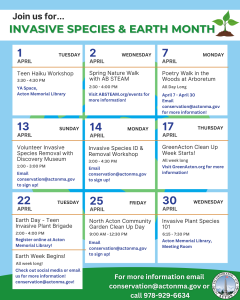
April is Invasive Species & Earth Month!

Happy Spring🌷 Join the Conservation Division in celebrating Invasive Species & Earth Month!

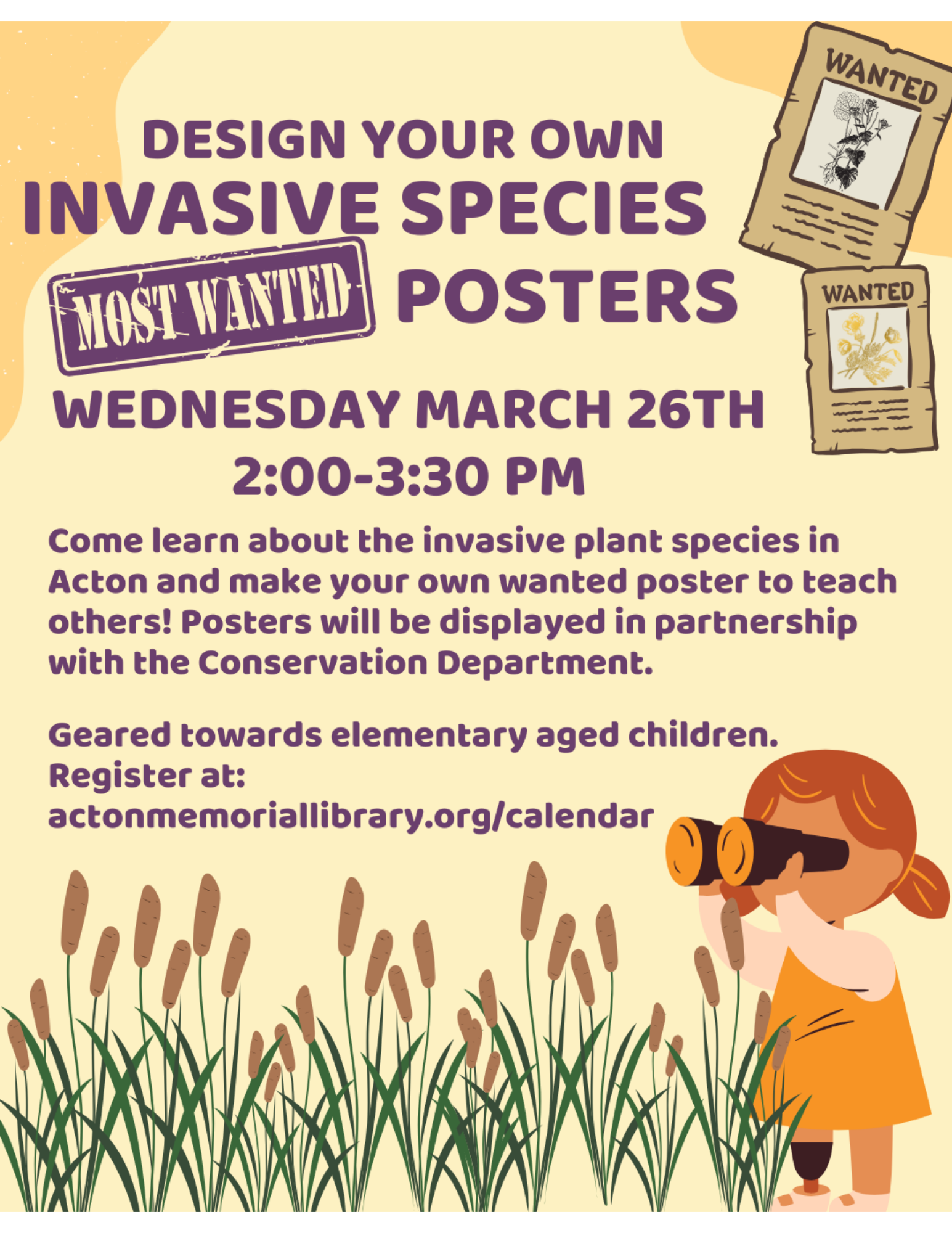
April 1st: Teen Earth Month Haiku Workshop Acton Memorial Library at 3:30 PM – Click Here to Register!

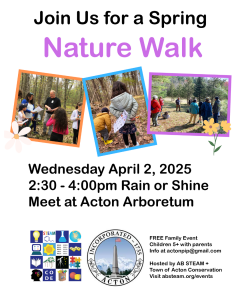
April 2nd: Nature Walk with AB STEAM at the Acton Arboretum at 2:30 PM- Click Here for more information!

April 7th – 30th: Poetry Walk in the Woods at Acton Arboretum’s Orchard Loop – Click Here for Map!

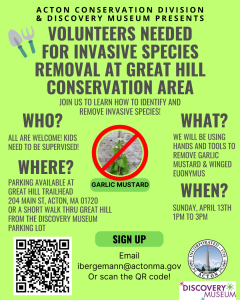
April 13th: Invasive species removal with The Discovery Museum at Great Hill Conservation Land at 1:00 PM – Click to Register Here!

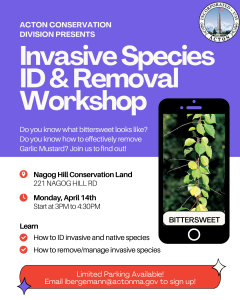
April 14th: Invasive Species ID Workshop at Nagog Hill Conservation Land at 3:00 PM – Email ibergemann@actonma.gov to sign up!

April 22nd: Teen Invasive Plant Brigade with Acton Memorial Library Teen Advisory Group at 2:00 PM – Click Here to Register!

April 25th: Join the North Acton Community Garden Clean Up Day at 9:00 AM – Click here to Sign Up!

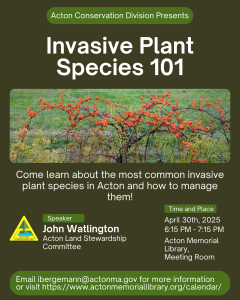
April 30th: Invasive Plant Species 101 Presentation at Acton Memorial Library at 6:15 PM – Click here for more information!

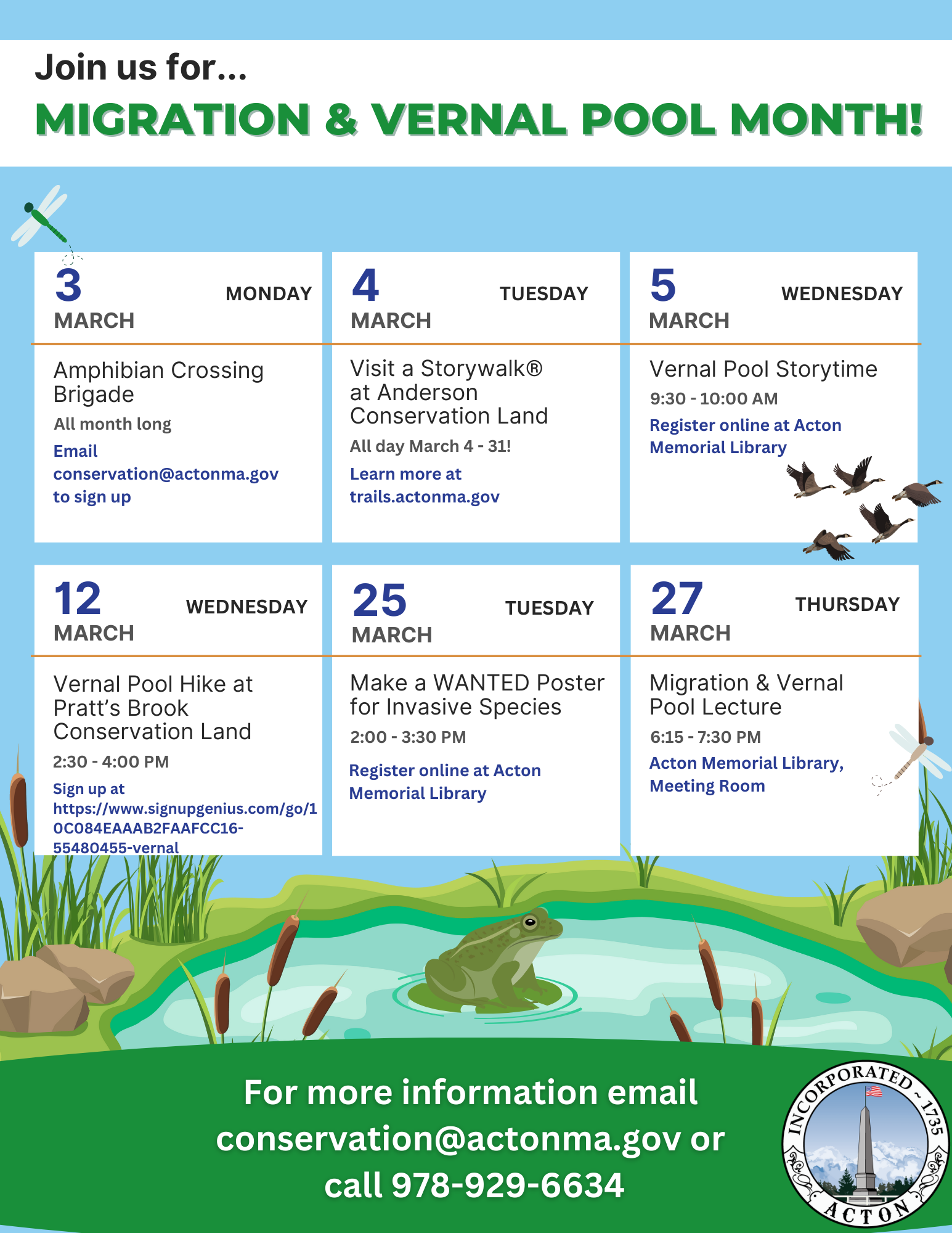
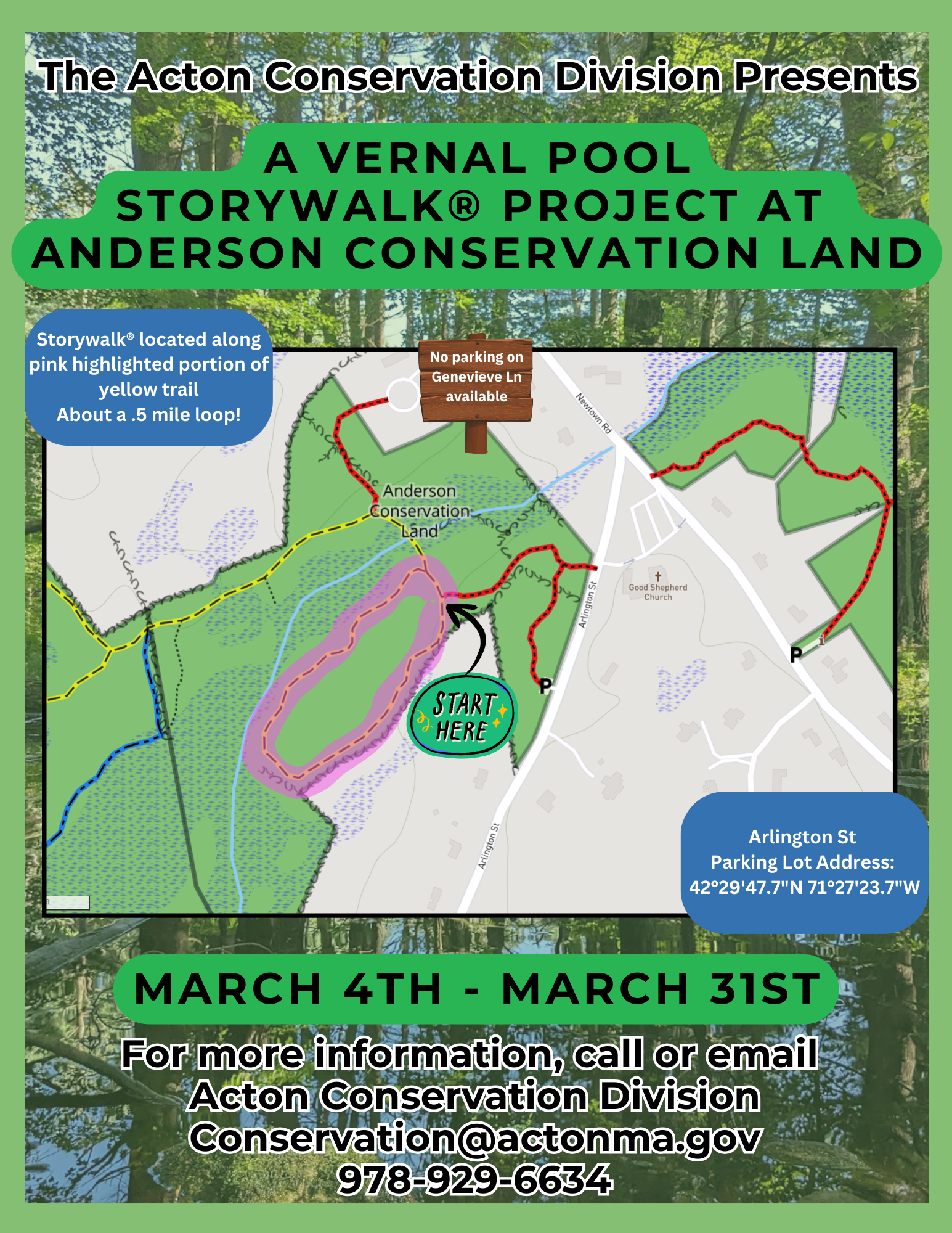
Migration and Vernal Pool Month!

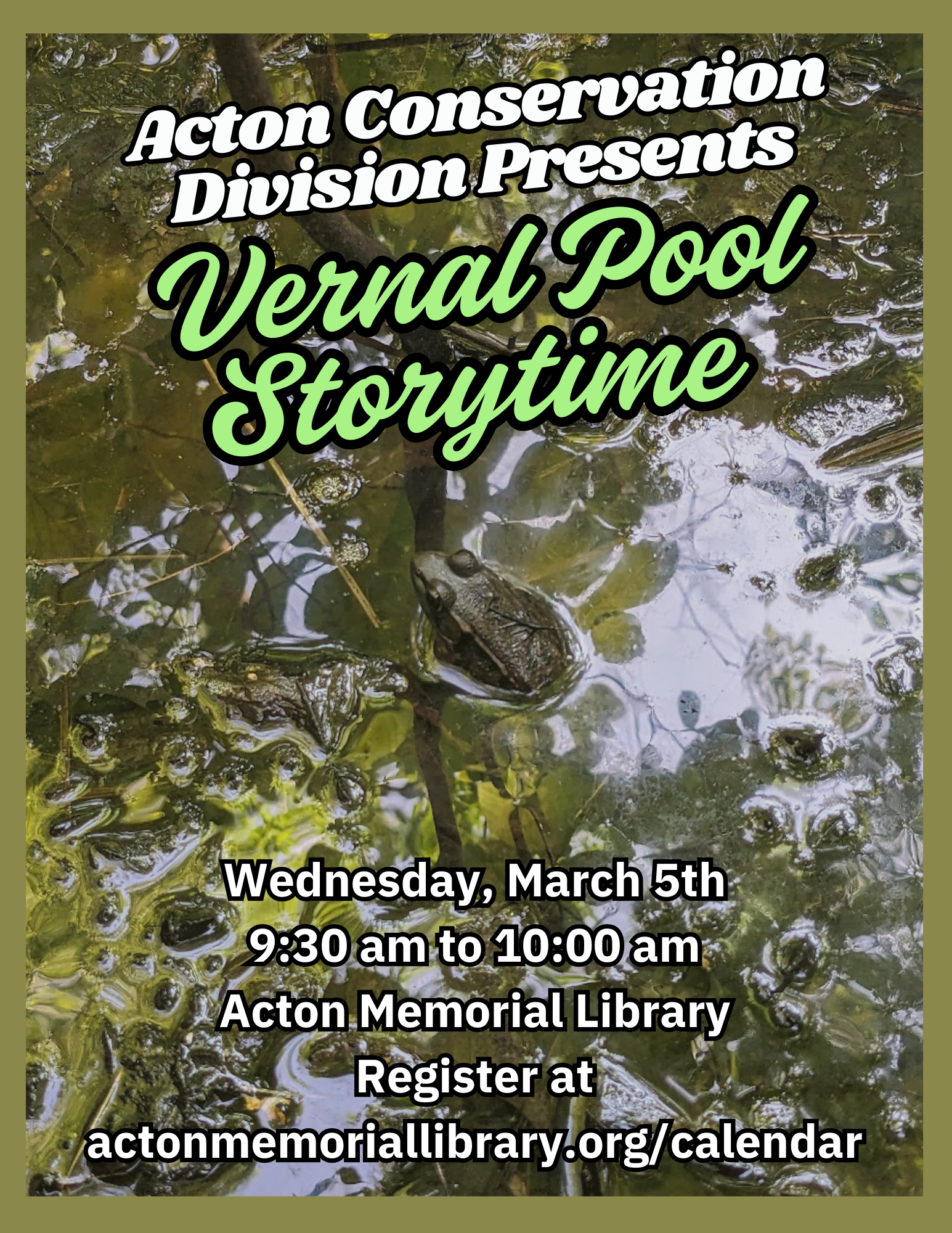
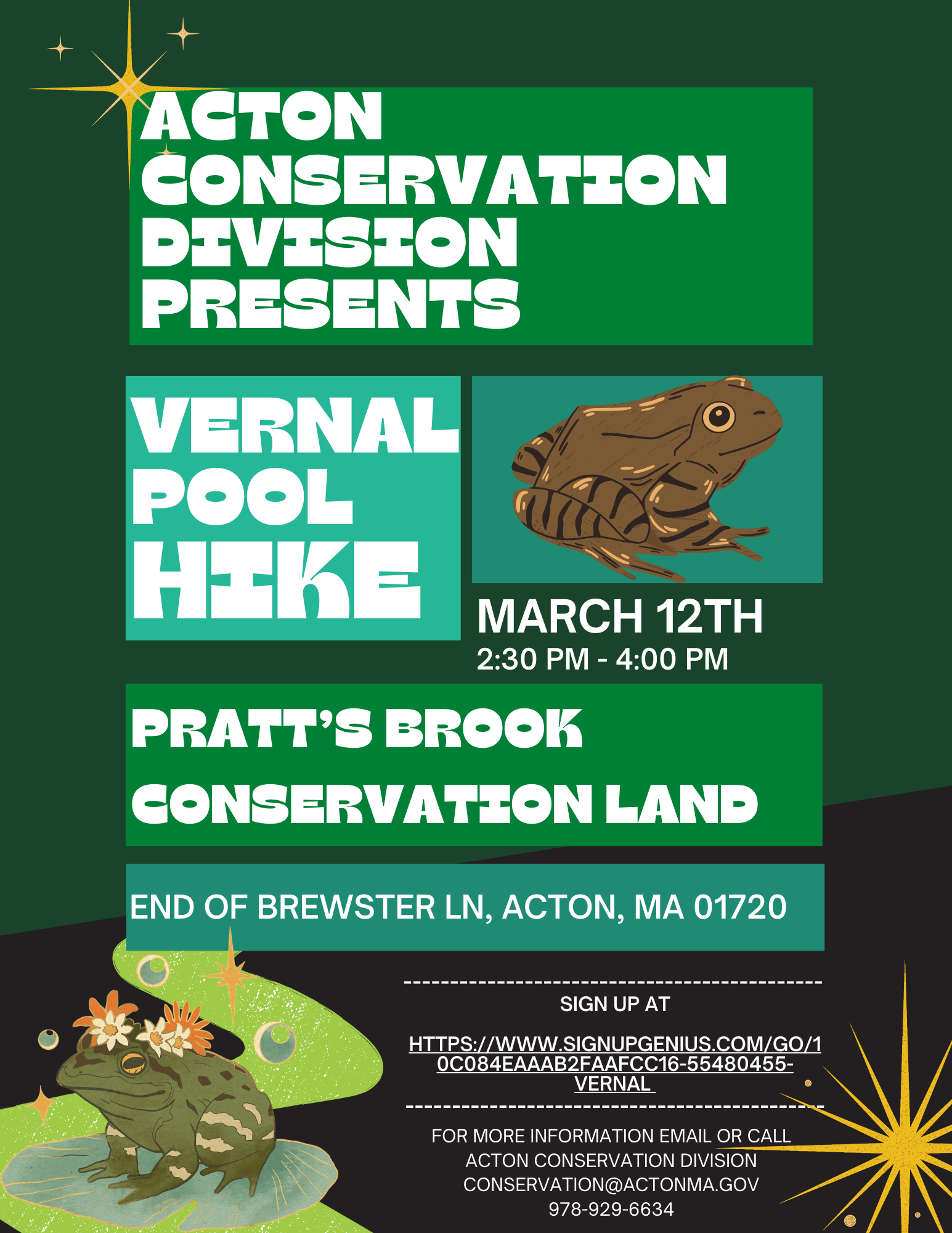
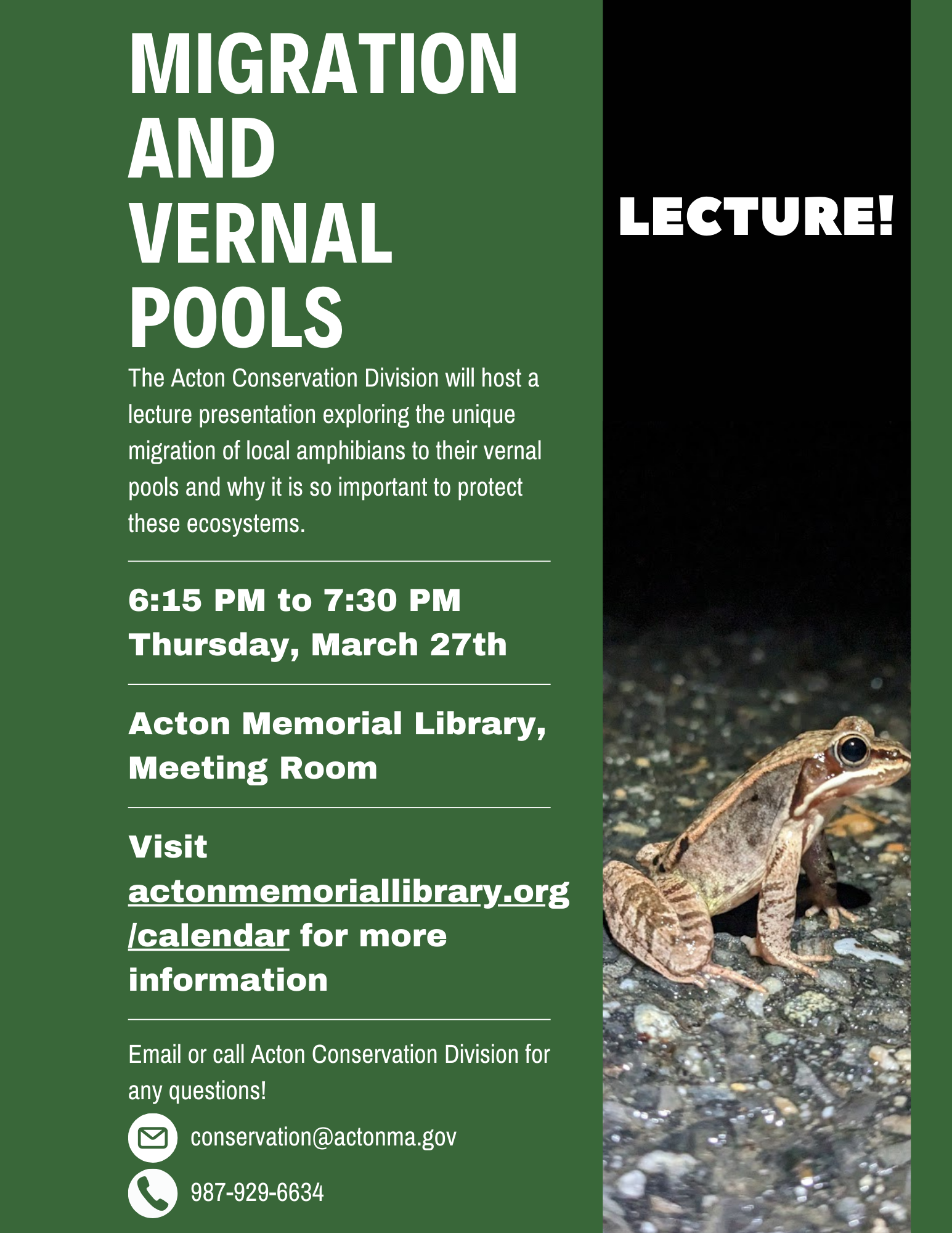
Happy Migration and Vernal Pool Month🐸! As the winter snow begins to melt and Spring flowers 🌷 emerge, the Acton Conservation Division will be hosting activities along the way. Join us for a vernal pool storytime📖 or a hike🗺️ to a vernal pool! Don’t forget to sign up to help out the Amphibian Crossing Brigade. Email us at conservation@actonma.gov!

Click on the flyer for more information!

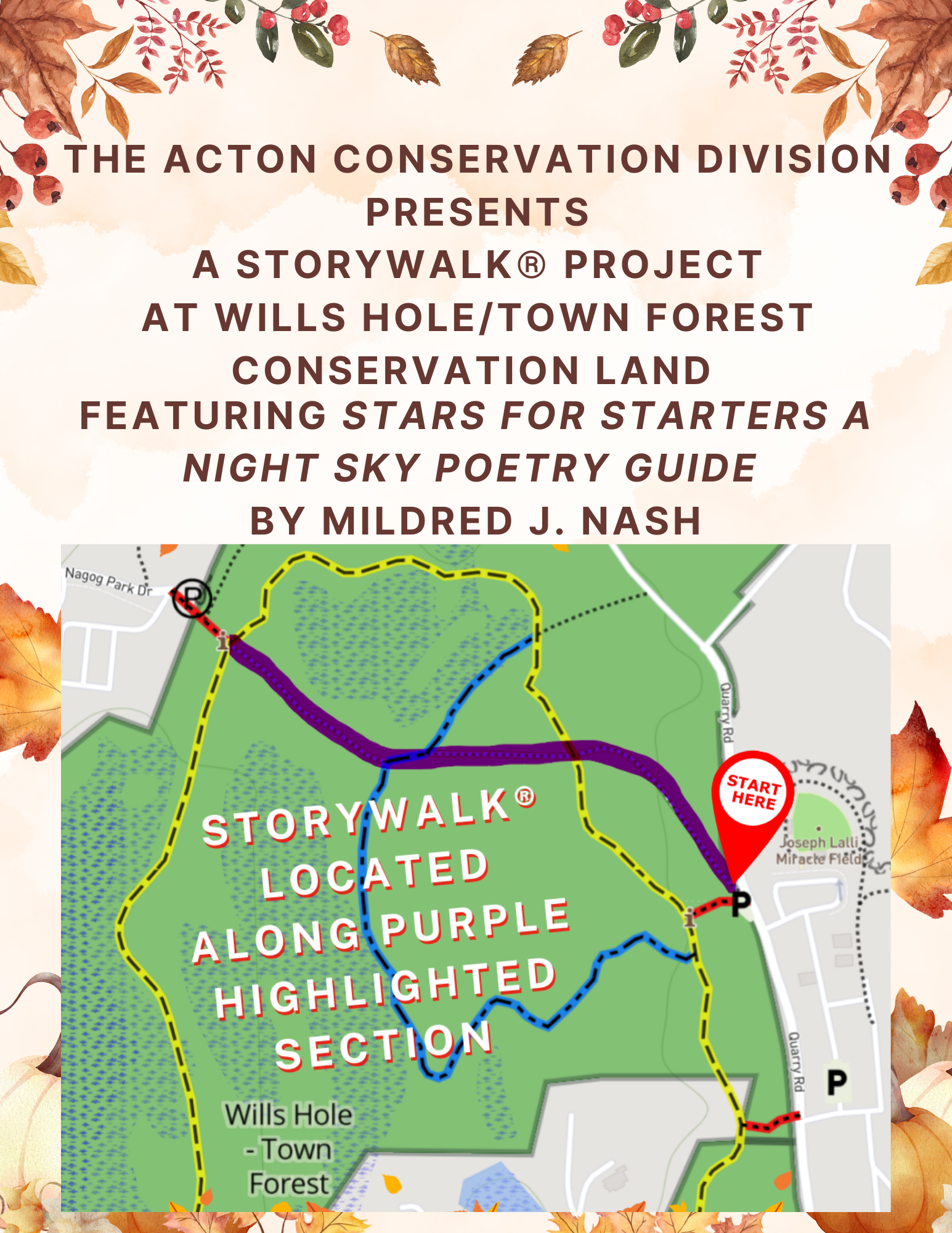
Storywalk®Project at Wills Hole/Town Forest Conservation Land

Join the Acton Conservation Division in learning the constellations through a walk in the woods. Visit Wills Hole/Town Forest Conservation Land to explore a new Storywalk® Project featuring Stars for Starters A Night Sky Poetry Guide by Mildred J. Nash. Parking is available at NARA. The Storywalk® Project will stay up throughout the winter season as weather permits!

This project partnered with AB STEAM and Acton Conservation Trust to coincide with their Astronomy in the Park event. You can read about that event on AB STEAM’s website (Click Here) or on Acton Conservation Trust’s website (Click Here).

Flooding and Damage Across Acton Conservation Lands

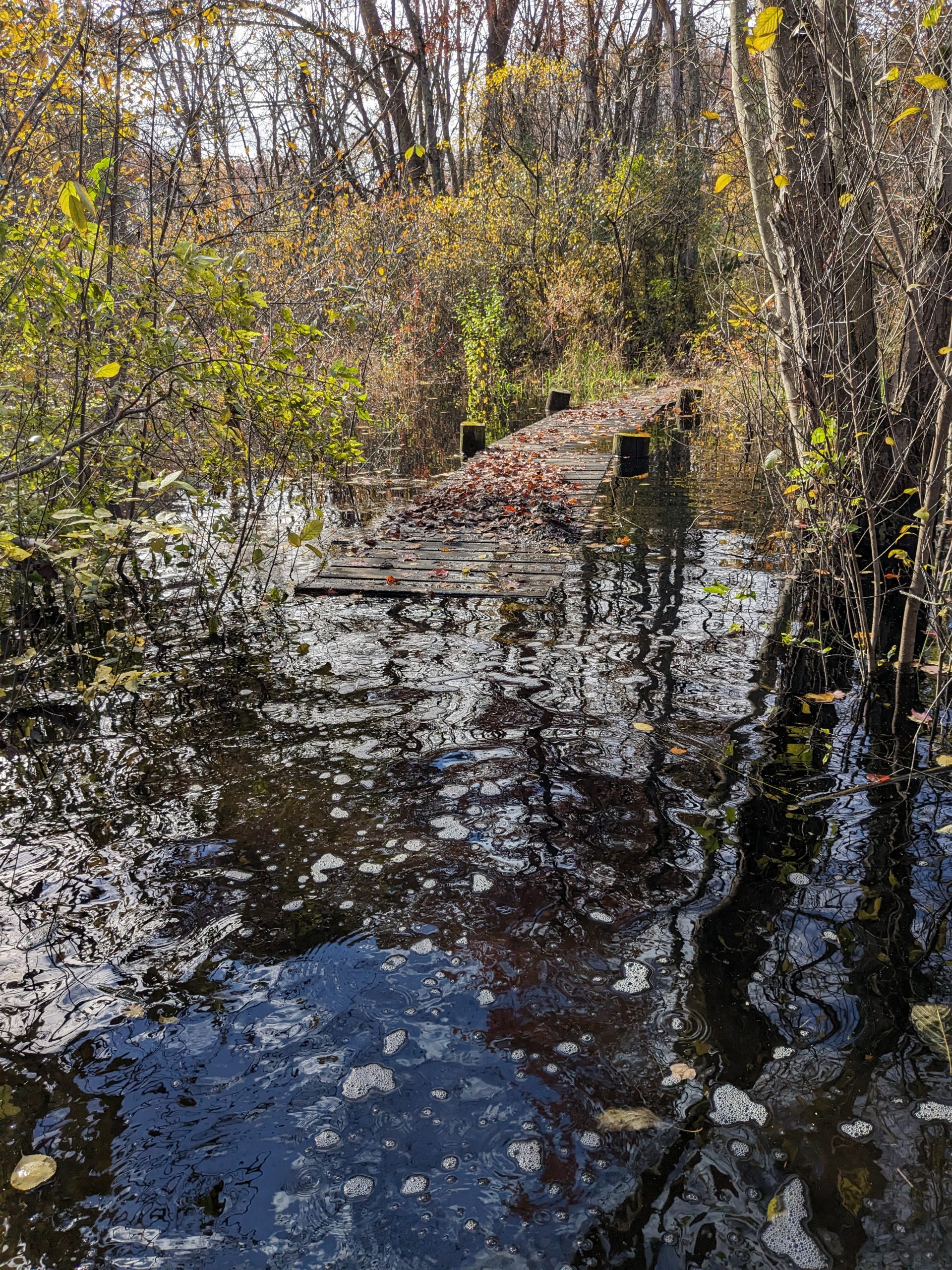
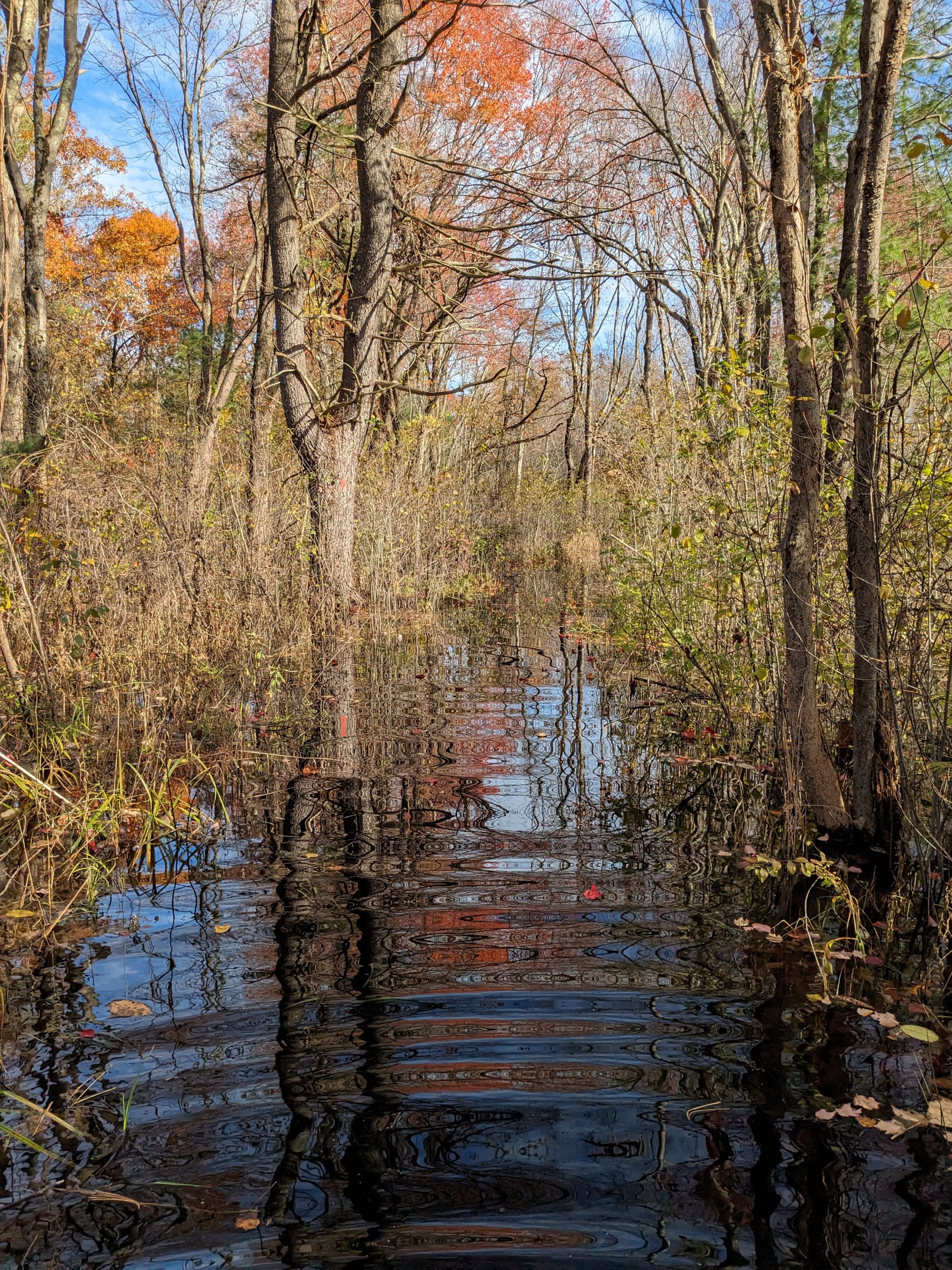
This past week’s storm dropped an estimated 4.1 inches of rain on Acton! Flood damage was observed throughout town as well as on our Conservation Lands. Please be cautious when visiting the trails and report any down trees or flooding to the Acton Conservation Division and/or the Land Stewardship Committee. Please refer to the CONSERVATION LAND & TRAIL STATUS page for live updates.

Acton Conservation Division: nr@acton-ma.gov

Land Stewardship Committee: lsc@actonma.gov

Trees blocking Camp Acton Access Road

Camp Acton Culvert washed out.

Assabet River Blue & Green Trail/ Acton Canoe Launch experienced significant flooding.

Fawn

By Linda McElroy

Fawn

Today’s WildAware article is submitted by Acton resident, Linda McElroy. Linda founded the Acton Land Stewardship Committee in the mid-1990s, and the Trail Through Time in the mid-2000s. The TTT, a Community Preservation Act project, highlights local Native American and Colonial landscape artifacts. Please visit https://trails.acton-ma.gov/trail-through-time/ for more information.

I was unloading gear onto the deck of my Maine cabin when I startled a doe. She leaped a few yards, stopped, looked back over her shoulder, and then loped down to the brook. As I resumed unloading, I realized that a tiny white-spotted fawn, absolutely still, was standing in low grass at the end of the deck. I approached it slowly to see it better. It never even blinked. I backed off, not wanting to frighten it.

Later, as dusk was coming on, I observed that it had lain down, partially hidden in the grass. Mom had not reappeared. I could only hope she would retrieve her baby during the night. Next morning, though, the fawn was in the same place. I began to worry about dehydration, need for food, etc. I called Inland Fisheries and Wildlife, left a message, and then phoned my neighbor, Joe.

Joe immediately came up the hill on his ATV, observed the fawn, and estimated it was a week old. He then slowly walked toward it, until it ran a few yards, to see if it was injured. It seemed healthy. He then turned his T-shirt inside out to stifle his scent, and dropped it over the fawn. He gently picked it up and returned it to the place its mother had left it.

He told me that fawns have evolved to remain still in tall grass while their mothers feed. Does will return twice a day to suckle their fawns until they are strong enough to accompany their mothers. Fawns are born without scent and thus remain safe even when predators are about. This strategy apparently has worked for many ages. Joe thought it best to leave the fawn alone until its mother moved it to another place.

The biologist at IF&W returned my call, and explained much the same information as Joe had done, adding that in modern times, farmers mowing their meadows in the spring have sometimes killed such fawns.

This event occurred in Maine, but the same species of deer live in the conservation land next to my home in Acton. They eat my tulips in spring, my hostas in summer, and crop my euonymus in winter. They occasionally rest at the back of my property, and when startled either snort or make a loud wheezing sound.

White-tailed deer, named for the white patch on the underside of their tails and rumps, are found from southern Canada south through much of the United States to northern South America. Does give birth in April to one or two fawns. Bucks grow antlers for the rutting (mating) season in the fall, shedding and regrowing them annually.

These deer are browsers, at home in lightly forested habitat with shrubs and low vegetation. Native Americans managed large deer parks, which they cleared of dense forestation and choking underbrush. Deer do not see well, sensing motion, scents, and sounds. When startled and running single file through wooded landscapes, they flick up their tails so their white patches can be easily seen by following companions.

An ancient, successful species, like other ungulates, it lives in herds for protection against predators, who may kill one animal while the herd survives. The downside of this beautiful, gentle, and robust animal is that, in recent years, it has acclimated to suburban areas where it thrives. As host to the tiny deer tick, which carries Lyme disease and other diseases dangerous to humans, it is now threatened in some communities that have instituted programs to eradicate white tails from their environs.

A few weeks later, Joe told me that he had seen the fawn, then much larger, with its mother, safely reunited.

Why is that Woodpecker Drumming on My House?

January 18, 2018

By Bettina Abe

“What on earth is that staccato drumming I hear penetrating the walls of my house?!” This fall Acton Natural Resources Division got a call from an Acton homeowner who noticed a bird pecking the fascia board of his house and wanted advice on how to make it stop.

There are a few common species of woodpecker one is likely to encounter in Acton and Boxborough’s forested habitats or at back yards feeders. One is tiny Downy Woodpecker (Picoides pubescens) about 6 inches tall, considered “dainty with a very short bill” according to David Allen Sibley, well-known ornithologist and author. Its drums are almost slow enough to count, about 9-16 per minute, a few seconds pause between drums. The Hairy Woodpecker (Picoides villosus), about 9 inches tall, has a sharper, louder and more high-pitched call than the Downy.  Its drum is a very fast buzzing, usually slowing at the end. The drumming is fairly long with a long pause between drums, four to nine per minute. Red-bellied Woodpeckers (Melanerpes carolinus) are frequently seen here, too. They are medium-sized with a fairly long bill and more distinctly marked by red sweeping from the top of its head down the back of its neck. They are about 9 inches tall. More likely to perch high up on a dead tree is the long-necked, broad-winged and long-trailed, unmistakable Pileated Woodpecker (Dryocopus pileatus), which is our largest woodpecker and is usually about 16.5 inches tall. Its call is loud, deep, resonant, often given in flight with higher-pitched calls on landing. Its drum is slow, powerful, accelerating and trailing off at the end; or short, up to three seconds long only one or two per minute. Other species that are common in Massachusetts are the Northern Flicker (Colaptes chrysoides), and the Yellow-bellied Sapsucker (Sphyrapicus varius).

Woodpeckers have strong bills that can chisel, peck and pull away bark in search of insect prey. They also excavate cavities in trees for nesting or as winter roosts. Pecking and drumming communicates with other woodpeckers. Fortunately, their reinforced, shock-absorbing skulls absorb the shock from the repeated blows. They have long tongues that are barbed and coated with bristles for spearing and extracting wood-boring insects or licking tree sap. They do not “sing” like other birds, but use sharp calls and rapid drumming to attract mates or announce territories. Occasionally, a woodpecker will drum on our houses or metal structures.

According to MassWildlife (Massachusetts Division of Fisheries and Wildlife), woodpeckers generally nest during April, May or June in tree cavities ranging in size from 1.25 up to 4.5 inches, which they line with wood chips. They lay between 3-10 eggs (depending on the species) that incubate for between 11-18 days. Both parents take turns sitting on the eggs. Some species migrate, while others are year-round residents in Massachusetts. They excavate the nest cavities not only to lay eggs, but also to create winter shelter.

Woodpeckers eat tree-dwelling insects including their larvae, pupae, and eggs. They also eat fruits, nuts and seeds. Some eat the sap that insects are attracted to. They have particular affinity to older, large diameter trees that indicate the presence of insect prey, rough or broken bark, dead or dying limbs, trunks damaged by weather or disease.

Though fascinating and important to the ecosystem, woodpeckers can cause problems for homeowners. Frequently in the fall, woodpeckers can damage the exterior of buildings with cedar, pine, fir, even redwood or plywood siding, including even aluminum flashing or vinyl siding. They seem to prefer wood that is brown or gray or natural-stained. Though woodpeckers are attracted to rotten wood, selecting a building does not necessarily indicate the presents of insects or unsound wood.

 Woodpeckers are strictly protected by the federal Migratory Bird Treaty Act and by state law. It is illegal to destroy, relocate, or possess these birds, their eggs, or nests.  

 So what can a homeowner do to prevent damage? The best methods are to discourage woodpeckers by scaring them away, or by using materials to prevent them from causing damage. It’s best to act quickly to try and intervene before a particular bird becomes habituated to damaging behavior.

Scare tactics may include yelling, clapping, loud music, or gently spraying with a garden hose. Hang strips of high-reflective tape or aluminum pie plates on strong over or near to the affected. It’s best to cover the spot that the woodpecker has been pecking with plastic sheeting, nylon tarp or plastic fruit netting. Attach the covering material so that it hangs at least 3 inches out from the wall to prevent birds from grasping the wall with its claws. Substitute wood trim with plastic/engineered products that are more dense than wood.

 References:

  1. The Sibley Guide to Birds, written and illustrated by David Allen Sibley; Alfred A. Knopf, Inc., New York. 2000.
  2. https://www.mass.gov/service-details/learn-about-woodpeckers
  3. https://www.massaudubon.org/learn/nature-wildlife/birds/woodpeckers/situations-solutions

Bettina Abe is a Town of Acton Natural Resources Assistant who introduced WildAware in 2015, with Paula Goodwin, a member of the Acton Conservation Commission and Land Stewardship Committee. The WildAware program is sponsored by the Acton Natural Resources Division and its purpose is to educate the community about the existence and habits of wild creatures, with the goal to increase community awareness of shared habitats. For information, call 978-929-6634 or send email to nr@acton-ma.gov.